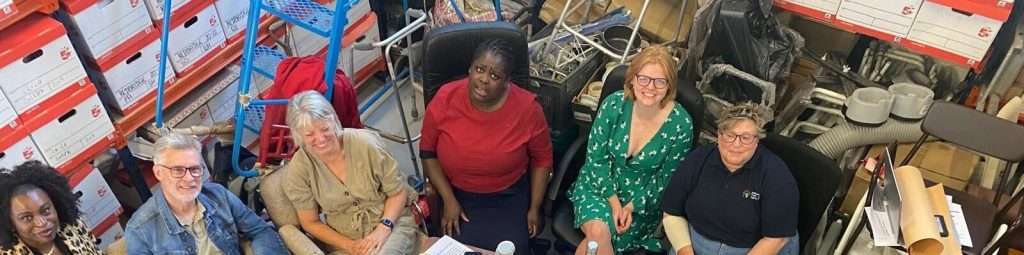
I’m someone who draws on care and support to live my life and a co-convener of the Social Care Future movement, which brings together others like myself who draw on support, families and people who work in or otherwise share the goal of a brighter future. Our shared goal is to bring about a future where the social care system is resourced and designed in a way that supports all who have reason to draw on it to live in the place we call home, with the people and things that we love, connected with and supporting one another and doing the things that matter to us.
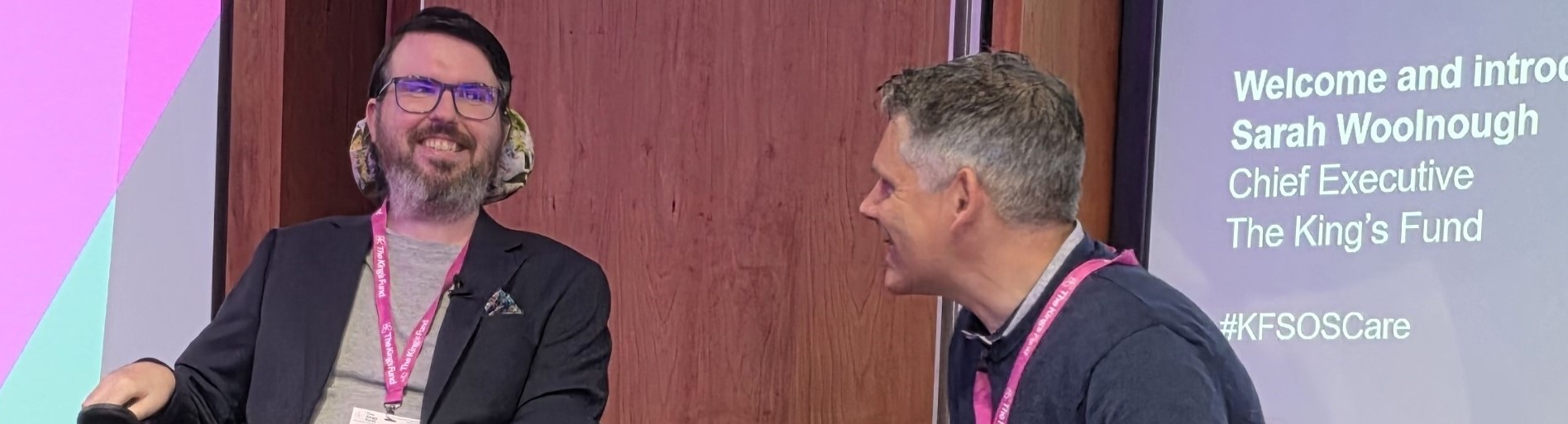
It was good to share the platform at the Kings Fund’s State of Social Care conference this week, and to see others who draw on support sharing their expertise and being involved in debates throughout the day. This shouldn’t – in our view – be exceptional. As the King’s Fund has been promoting, modern public services should be about doing with, not doing to.
While part of the opening panel conversation, Sarah Woolnough asked me how does it feel? My one word answer was “precarious”.
We met just after the 15th anniversary of the Panorama exposé of Winterbourne View, and in the knowledge that despite the horrific abuse it depicted, we are not much further forward in ending the practices of institutionalisation that create the conditions for such abuse to happen.
That lack of progress speaks to the state of our social care system, because what Winterbourne View and institutions like it represent is the tip of a much larger iceberg. People are often deprived of their liberty and then become incarcerated in such places for many years because they and their families have been failed by the social care system, and their lives have come apart, and then the social care system is unable to find ways to support their move back into a place they can call home.
Because I draw on support, I — and thousands like me — live my life in a state of precarity, never sure how long I will be able to live in the place I call home, with the people and things I love, doing what matters to me, coming to events like this.
Meanwhile, many hundreds of thousands of pounds more are spent on ongoing incarceration, despite all the harm it is causing to those subjected to such treatment and the people who love them.And this speaks to a wider truth: yes the system as a whole doesn’t have the resources it needs overall and we need to work out how to command those resources; but of equal importance is how we use the resources we do have, centred as they should be on promoting everyone’s human rights and freedoms.
Social care isn’t just under-resourced, it’s also under-imagined.
And so I encouraged everyone who was at the Kings Fund this week to consider – before debating anything else – what is our ambition for the lives of those of us who have some reason to draw on social care to live them? How should our lives be and by what measure? Does liberty matter? Autonomy? Participation? Connection?
As Phil Holmes, fellow panellist and ADASS president said at the end of our conversation, the mission should always be “good lives for people on their own terms – and you’ll do things differently if you bother to connect with people and get to know them as people and what matters to them”.