What would our social care system look like if we valued not only the support it delivers, but the relationships, contribution and mutual support it helps make possible? Michael Roberts, Research and Learning Lead, Emily Brook, Director of Innovation, and Rachel Fuller, Communications Director at Care City, reflect on what we’re learning about the role of social care in helping people connect, contribute and support one another.
When Catrina first started working with Connect, she rarely left her home. Her husband had died, she was dealing with a difficult family dispute about inheritance, and she had been losing weight. The team noticed she wasn’t really looking after herself or eating full meals. Then, in one of her conversations with the Connect team, her love of bingo came up.
It reminded Catrina of a friend she used to care for, who she still spoke to regularly on the phone but hadn’t seen in person for over a year. Her friend used a wheelchair and had mentioned going to bingo at a local community centre. So they made a plan to attend with one another. They met at the end of Catrina’s road and caught the bus there together.
Since then, Catrina has started travelling regularly on the bus with her friend, going into Romford town centre with her daughter and grandchildren and getting to know her neighbours. She’s eating better. She’s taking more pride in her home. And she started talking about wanting to smoke less because she’d decided that it wasn’t good for her. This was without anybody referring her to a stop-smoking service, or telling her that she should prioritise it.
This story doesn’t sound much like a social care intervention. And perhaps that’s the point.
Catrina’s story brings us back to a much bigger question: What is social care for? A social care system that sees people primarily as passive recipients of support is neither right nor sustainable. We need to think differently about care, and reshape it in a way that recognises how everyone has something to offer, as well as something they might need.
Across the country, people and organisations are already showing what a different approach can look like, which is grounded in relationships and mutual support. We’re seeing an emerging consensus around the need for an approach that creates the conditions for people to connect, contribute and look out for one another.
This doesn’t diminish the importance of professional care and support. It changes how we think about its purpose–not simply doing things for people, but enabling them to live the lives they want, with the relationships, opportunities and support that make that possible.
More than meeting needs
Connect is a partnership in Barking & Dagenham involving local voluntary, community, faith and social enterprise organisations (VCFSEs). It was created based on research with local people experiencing social isolation, and on a simple premise: relationships and connections aren’t just things that help keep us well. They are an essential part of how we get through difficult times, recover and rebuild our lives.
The Connect programme works alongside people, at their pace, to help them find connection and belonging, discover opportunities in their neighbourhood, pursue what matters to them and find ways to share what they have to offer. And that last part is becoming increasingly important to us. Because Connect isn’t really about finding a “lonely person” , a new group to attend, or “befriending” someone.
Of course, sometimes a group is part of the story. But the real goal is genuine relationships: with friends, family, neighbours and other people in the community. We want support eventually to flow between people, rather than always flowing to somebody from an organisation or service. And we’re seeing what that can unlock.
Let’s take another example.
Adam, 25 referred himself to Connect having spent years rarely leaving his house. After meeting regularly with one of the Connect team, where they explored what mattered to him, they decided to take a trip together on the bus to a local board-game group.
When he was there, Adam found something that really matched his passions and people with shared interests. He started going to games groups with his dad, and eventually found a separate group for people with autism like himself.
Soon, Adam began asking about volunteering in a games shop or café. More recently, he’s set himself the goal of learning to drive, partly because he wants to take some of the pressure off his dad. What started as a step to help connect Adam has evolved into Adam thinking beyond himself into supporting others, and having a stronger sense of purpose.
From being supported to having something to give
One of the things we’re beginning to notice through Connect is that the moment someone starts thinking beyond themselves can be significant. Someone who joined because they needed support starts helping somebody else. Or they discover a skill they can share. Perhaps they volunteer or start thinking about turning their passion into a job. Or starts checking on a neighbour. We’re recognising these moments as signs that a person may be getting closer to no longer needing Connect.
That feels important when we think about the future of social care. People aren’t simply collections of needs to be met by professionals; they are the fabric of a social and caring society in which these things flow between one another. So perhaps one measure of good social care should be whether we have helped create the conditions in which someone can not only receive support, but connect, take part and contribute.
But how do we prove this approach works?
We are getting better at measuring Connect’s impact. We consistently talk with people about five things that have emerged that help them to find networks of reciprocal support, including whether:
- relationships feel as strong and satisfying as people want them to be
- people get to meet other people outside of formal groups
- people are leaving home as much as they’d like to
- there is recognition and sharing of what people have to offer
- people are trying new things
These are things we can quantify (if we want). They are also the kinds of questions that we reflect on with residents in ways that are relational, curiosity-driven and geared to help people think about what makes sense as a next step.
But are these the things our partners and funders need to see to understand the benefits of Connect? How do we demonstrate that Connect is contributing to the broader priorities and ambitions they’re working towards, and the outcomes they’re trying to achieve?
Data collection: broad strategic priorities vs things that feel relevant to people’s lives
We’ve not focused our data collection and conversations on things like wellbeing, mental health, physical activity levels, levels of healthcare interactions. These are things that might sit closer to measures that are directly translatable to some broader strategic priorities.
In fact, we’ve sometimes avoided this because these haven’t been the kinds of conversations that residents feel are important in order for them to work out what’s next for them. There’s a strange juxtaposition in Connect that often people do start choosing to be healthier, to use services less and to take more action themselves. But they do this without focusing on that as the main objective.
When we start to focus more significantly on data collection that targets these things, and ask people about things might not feel relevant to their lives, we risk making a switch. Switching from being the person who listens and walks alongside somebody to being a person holding the clipboard and assessing effectiveness. This can disrupt relationships and trust.
There are bigger questions here.
How do we capture the effects beyond the individual, which are so central to what we’re trying to catalyse? Or measure the ripple effects when one person’s growing confidence affects their family, their neighbours or other people in their community? Can we demonstrate the value of relationships that may help prevent somebody reaching crisis months or years later? In other words, how do we demonstrate the value of something fundamentally relational without measuring the life out of it?
We’ve captured some of these changes in the individual stories shared in this blog, but we also want to understand the bigger picture. How do we show the wider impact of stronger relationships and connections, including changes that might only become apparent over time? And do that without constantly asking residents to provide more information?
We don’t have all the answers yet. But we’re exploring how to bring together people’s experiences with other evidence to build a fuller picture of what Connect makes possible. This feels like a conversation worth having as a Social Care Future community.
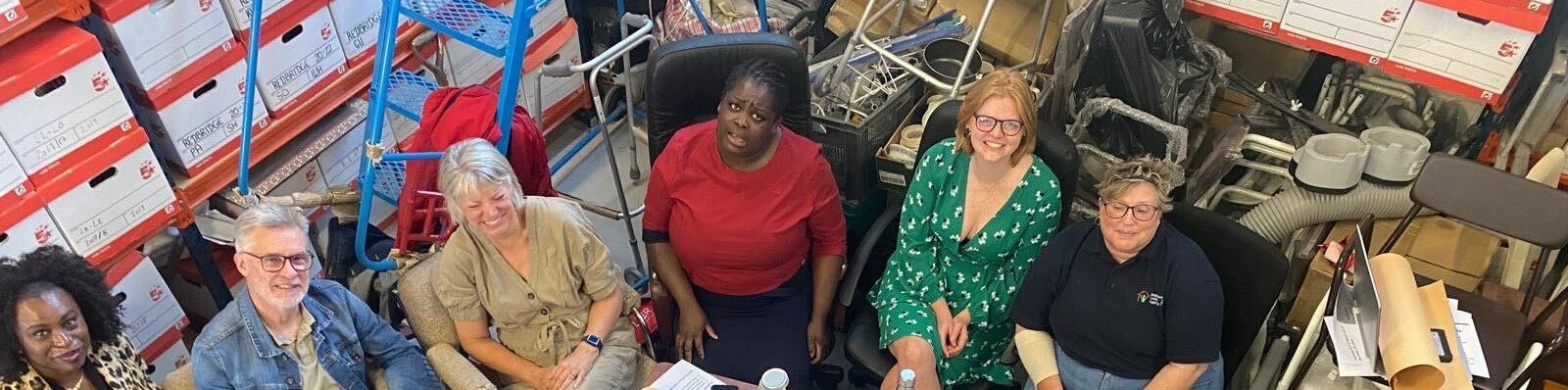
A Connect learning session, reflecting on what we’re discovering through our work and exploring what we might try next.
Care City leads Connect, a borough-wide initiative bringing together voluntary, community, faith and social enterprise organisations across Barking & Dagenham to support residents experiencing social isolation, on behalf of BD Collective. Explore Connect and read more about the people, partnerships and learning behind the programme on Care City’s website or drop us a line at theteam@carecity.org