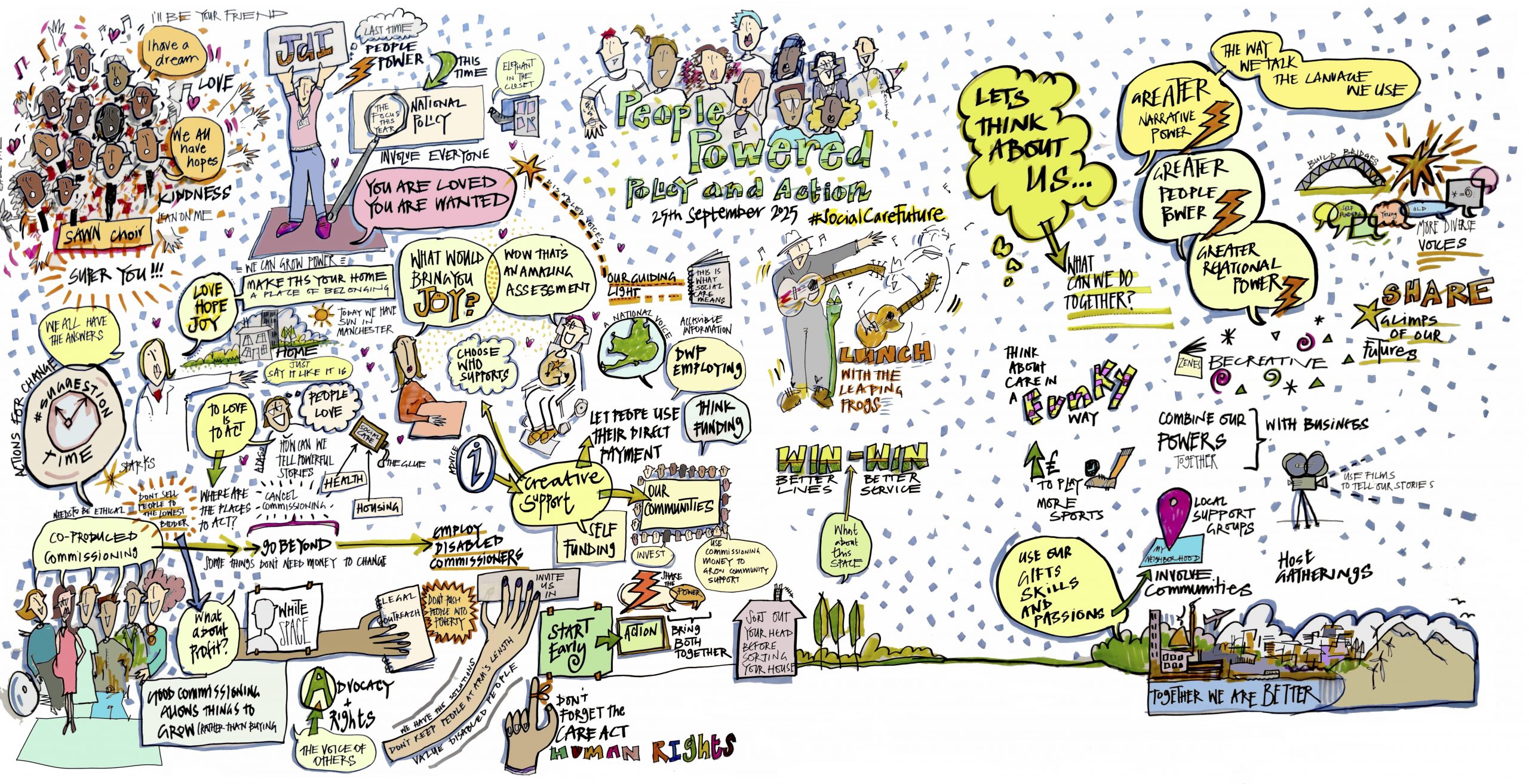
How can we grow an approach to social care that supports all of us to find and bind together the resources, relationships and support that help us to live the life we want to live?
That’s the question that over 200 people who draw on adult social care and allies came together to explore at #SocialCareFuture’s annual gathering in Manchester this September, with the shared task of making suggestions to the Casey Commission on the future of adult social care who we were pleased to welcome for the whole day.
The message they heard, loud and clear from a growing coalition of organisations and groups from across the social care sector and beyond, was: “listen to us and work with us to grow a system that actually helps people live good lives”.
Today #SocialCareFuture is publishing a short report and film, based on that September event, bringing together those suggestions under the following themes:
Power With, Not Power Over
People want to be real partners in decisions—not just asked for views after everything’s already decided. That means people who draw on support having proper roles in shaping policy, working on recruitment panels, and being part of strong, local disabled and older people-led organisations. Basically: “Nothing about us without us”—and that includes older people too.
Rewrite the National Story
Social care isn’t a “burden”—it’s a route to living a good life. People want a new national story that focuses on wellbeing, belonging and human potential. Government and public bodies should use hopeful, human-centred framing that builds support for change.
Rights First, Always
Human rights must lead everything—home, family, autonomy, equality. Strengthen the Care Act, turn “should” into “must,” and end barriers like Section 22. Build accountability people can rely on. And drop dehumanising language like “service users.”
Information That Opens Doors
Information and advice should spark imagination, not force people down standard paths. People want creative, person-centred, accessible guidance—including self-funders, who often get the least support.
Assessments That Start with People
Assessments are too rigid and system-led. People want flexible, creative conversations that start with what matters to them. Social work education should focus on rights. And practitioners need better knowledge of local options—not just default services.
Real Control Through Self-Directed Support
Self-directed support should be easy, flexible and focused on what people want from life. Cut the red tape. Make direct payments the norm. Stop forcing people to justify every detail at reviews. Trust and flexibility should drive the process, not bureaucracy.
Money That Enables, Not Restricts
Charging pushes people into poverty and stops them seeking help early. People want a move toward ending charges altogether, and immediate fixes like fairer disability related expense policies, better assessments and benefits that allow genuine participation in community life.
Commissioning for Thriving Communities
Commissioning should grow relationships and wellbeing, not buy “time and task.” End harmful practices like online “auctions.” Train commissioners in asset-based approaches. Some people want to go further—scrapping traditional commissioning entirely in favour of direct payments or supported purchasing.
Early Action as the Default
Social care should shift from crisis-driven to connection-driven. People want early action that builds purpose, friendship and belonging. This means new test-and-learn programmes, better first-contact experiences and approaches that walk alongside people, not just signpost them.
Measure What Matters
National standards and regulation should focus on what people actually value: choice, control, relationships and inclusion. Assurance must take people’s voices and contributions seriously. Regulation should allow personal assistants and small community supports to thrive. Outcomes should be about wellbeing, not throughput.
A Workforce for Good Lives
Workforce reform should centre relationships, creativity and community, not just professionalisation. Support the full mix of roles people rely on: personal assistants, Shared Lives carers, micro-enterprises, coordinators and more. And shift social work training back to person-centred practice.