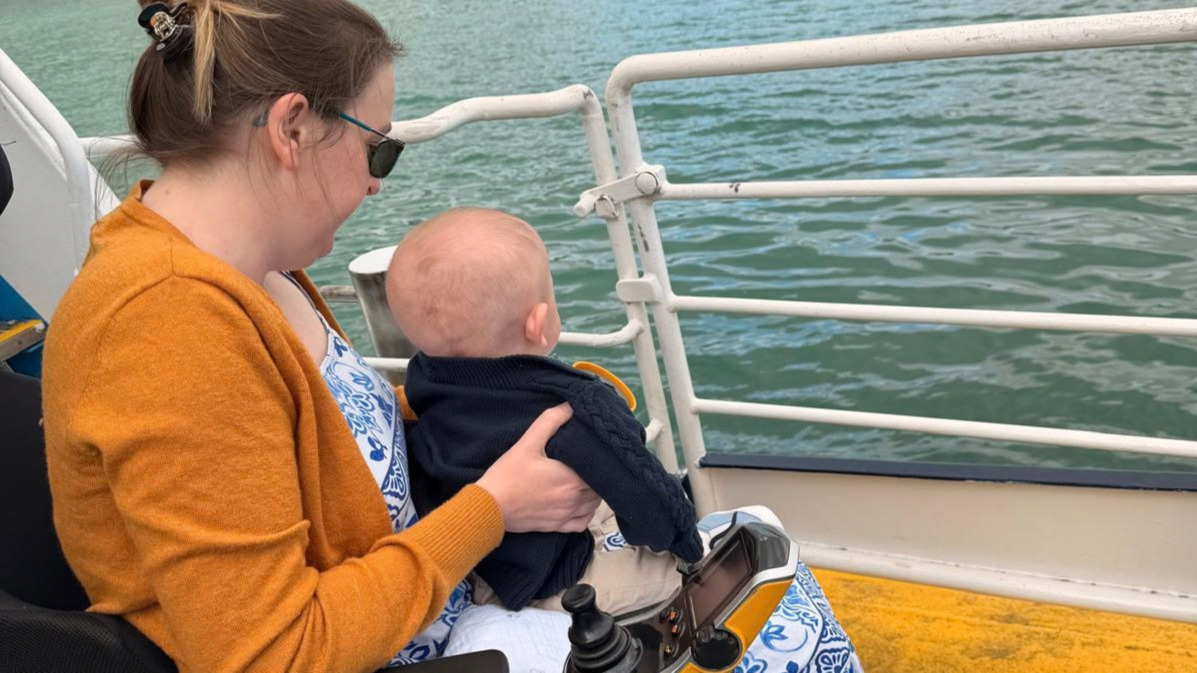
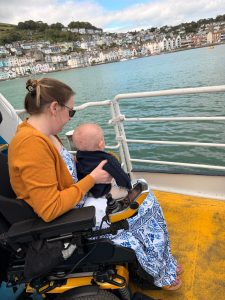
Dr Anna Severwright living her gloriously ordinary life with her son, Theo.
Real change may be coming…
I am writing this after a couple of whirlwind weeks in which announcements, policy ideas and possible changes to social care have arrived at record speed. It is an exciting time. After nearly ten years of trying to improve social care, I have never felt such anticipation, urgency and hope that real change may be coming. But alongside that hope, I feel a growing unease about what kind of change we are actually heading towards.
I am also writing this in the dark, as my baby sleeps next to me, hoping the sound of typing doesn’t wake him. I woke unable to sleep, with thoughts whirling around my head, and realised why I have been carrying a growing sense of unease these past couple of weeks: not only does my life depend heavily on social care, but my son’s life does too. The stakes feel even higher for me now.
There have been speeches, interviews and, for once, a great deal of attention on social care. But detail has been sparse, leaving plenty of room for rumours, speculation and possible outcomes that, if I am honest, I have not kept up with while trying to enjoy the last few months of maternity leave—and sleep whenever I get the opportunity. So, at the risk of adding to the confusion and noise, here are a few of my thoughts.
While completely missing the “why”
We seem to have started with the funding and then moved to a narrow discussion of what might be provided, such as free personal care, while completely missing the why. Before we debate how social care should be funded or what it should provide, we need to ask what we want our lives to look like as we age, how we can stay as well as possible, and how we want to live when we need more support. Working-age disabled people like me have been noticeably absent from the discussion too, creating the sense that we do not matter and are merely an afterthought. This has also created much worry and stress amongst disabled people.
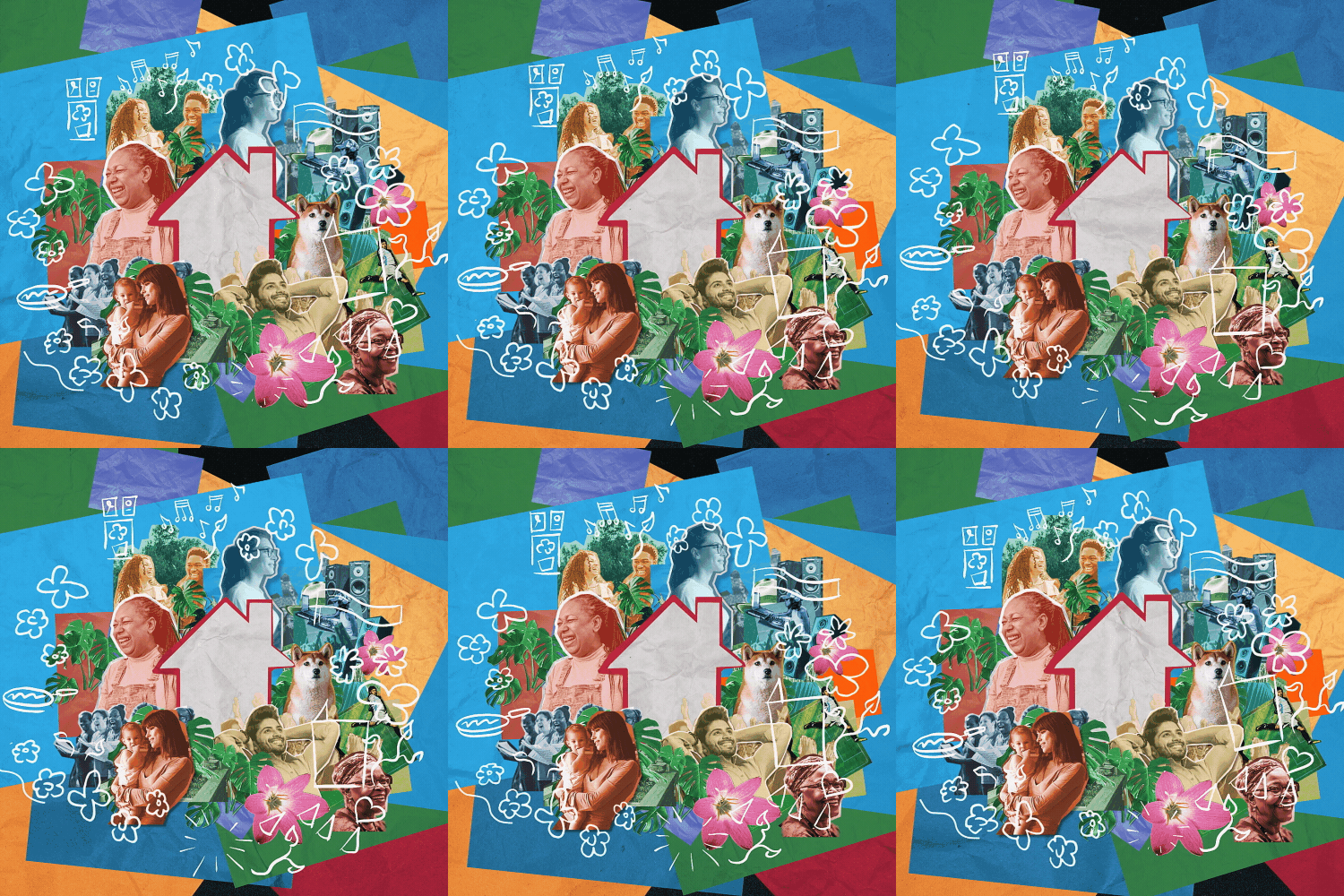
If we truly believe in the Social Care Future vision—“We all want to live in the place we call home with the people and things that we love, in communities where we look out for one another, doing the things that matter to us”—then free personal care alone cannot meet those fundamental desires. If I am clean and fed but stuck indoors, unable to work, be a parent or see friends, we will not have achieved what matters. The same vision should equally apply to people towards the end of life. What it means may change somewhat at different life stages, but living somewhere safe and familiar, staying connected to the people we love, and doing things we enjoy are surely just as essential. That is what I would want for myself and my loved ones.
The political ambition has been unusually brave and heartfelt, but the conversations around it have too easily reverted to doing the current system a little better. This is a once-in-a-generation opportunity to begin with the lives we want people to lead and then ask how we design a different system to make those lives possible. If we do not, outcomes may stay the same or even get worse. Across the country, people and communities are already working differently and supporting people to live great lives. Let’s learn from them, because any National Care Service (NCS) must embrace variety and individual choice rather than making everyone, everywhere, fit a standard offer.
This is not simply about a public service; it is about our lives.
Disabled and older people need to be in the rooms where decisions about the design of any NCS are made. It is 2026, yet decisions about our lives—and the systems that directly and profoundly affect them—are still made without us having a meaningful say. We are not treated as experts, even though we know what works, where the system wastes resources and what needs to change. This is not simply about a public service; it is about our lives.
Personally, I welcome the idea of pooling the financial risk of social care, as we do in the NHS, rather than leaving disabled and older people to shoulder its huge costs.. But I am terrified of an NCS coming at the cost of losing choice and control over my life. The current system already takes power away from us, for example panels meet behind closed doors to decide about our lives.
A new system needs a founding principle that people and their loved ones are the experts in their own lives and should have power over it, properly embedding choice and control. Self-directed support, including direct payments and Personal Assistants (PAs), is a way to achieve this for many of us but needs to be made easier and more available for people. My son loves my PAs, and they adore him. I do not want a shiny NCS if my life is miserable; I just want a gloriously ordinary life like anyone else.
Anyway, my little boy has woken up for the day, given me a big smile and is ready to play. That is my gloriously ordinary life—and exactly what any social care system should make possible for everyone.
Dr Anna Severwright OBE is Co-Convenor of #SocialCareFuture