By Neil Crowther
The Live More test and learn initiative in Greater Manchester has shown the potential to improve how people and families can experience living with dementia. Proactive, early support, centred on a relationship built around shared passions and interests allowed people with dementia and family carers to stay active and connected to the places, people and things that mattered to them.
Before reading further, please take 3 minutes of your time to meet some of the people who took part and hear in their own words what it meant to them in this lovely film by our friend Leighton Wise.
A desert of support
A common trajectory for far too many people and families living with dementia is the struggle for a dementia diagnosis, the trauma of getting one, and then a feeling of being dropped off a cliff. People then encounter desert of emotional and practical support until they reach crisis point, often played out through increasingly desperate calls to GP surgeries, an unplanned and prolonged hospital stay or the distressing move into a costly residential care home. The physical and mental health and wellbeing of family carers is deeply harmed, with people experiencing significantly higher rates of depression, anxiety and psychological distress than the general population. Indeed, this characterises my own parents’ journey during and beyond my dad’s life with Alzheimer’s disease. The avoidable costs to our health and care system, as well as family’s personal finances are well-documented.
It doesn’t have to be this way. With funding from the Department for Health and Social Care’s Accelerating Reform Fund, Live More took Shared Lives day arrangementsand offered them to people living with dementia and their families, before they were yet likely to meet the very high thresholds for eligibility for adult social care, or had approached their local council for support. Shared Lives schemes worked through primary care networks, memory clinics, voluntary and community groups and online forums, to reach people and invite them to consider taking part and evaluate the approach.
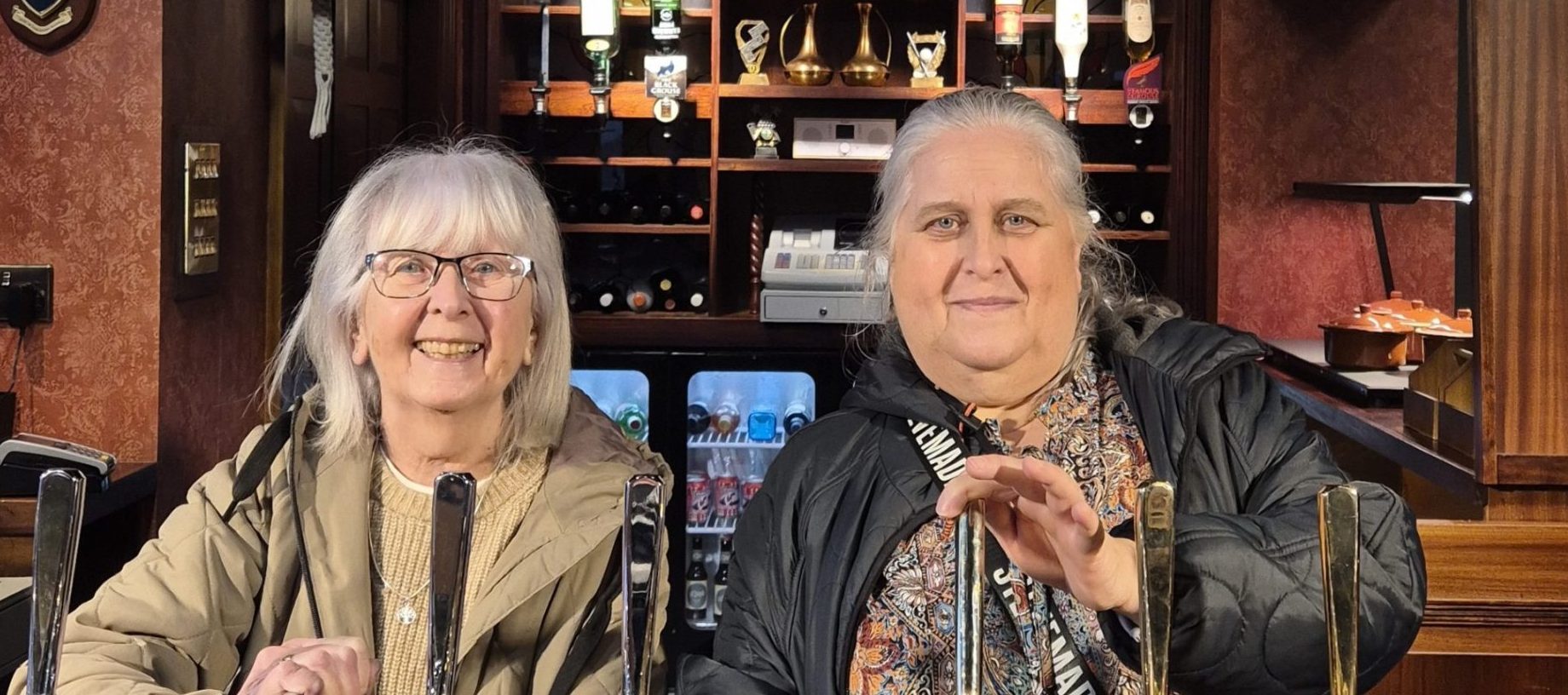
For those who chose to take part, the careful Shared Lives matching process connected people with dementia with established Shared Lives carers based on personalities, interests and passions. Once matched, people with dementia then spent around half a day week doing the things they enjoyed doing together, while family members got some space and time to themselves. People did all sorts of things together, at home or out and about, including walking in the hills, going shopping, playing bowls, taking a weekly swim, making a meal together, visiting a museum, doing some DIY, going to the match and pulling pints in the Rovers Return….
Test, learn….
An independent evaluation explored whether the approach was feasible to set up and deliver, whether it was valued by people living with dementia and their families, and whether it was valuable, both in terms of improved wellbeing, and in terms of its potential to prevent, reduce or delay avoidable needs for more intensive support. To gather evidence and insight, a mixed methodology used ongoing engagement, surveys, interviews, group conversations, desk research and economic analysis. Other methods, co-designed with people and families to gain an ongoing account of people’s experiences were explored, developed and tested, such as a digital ‘scrapbook’, but proved challenging to implement.
You can read the full evaluation here. Its findings showed the value of acting early, before isolation, exhaustion or crisis take hold including:
- Improved mood and wellbeing
- Greater confidence, choice and independence
- Stronger social connections and a sense of belonging
- People reconnecting with interests and parts of their identity
- Family carers having more space to step back from practical caring tasks and simply be a partner or family member
- Support that helped people remain at home for longer
It also estimated a strong social return on investment of nearly £6 of value for every £1 invested.
Speaking of the findings, Sarah McClinton, Chief Social Worker for Adults, and Co-Chair of the Frailty and Dementia Modern Service Framework Task and Finish Group said:
“Too often, families are given a diagnosis and information about dementia, but very little practical support to help them continue living well. Live More fills the space between diagnosis and crisis. It shows that early action does not need to limited to another clinical intervention or standardised programme. It can begin with something profoundly human: finding the right person, building trust and helping somebody continue doing the things that give their life meaning. This is good for people living with dementia, good for their families and potentially good for the health and care system.”
…and grow?
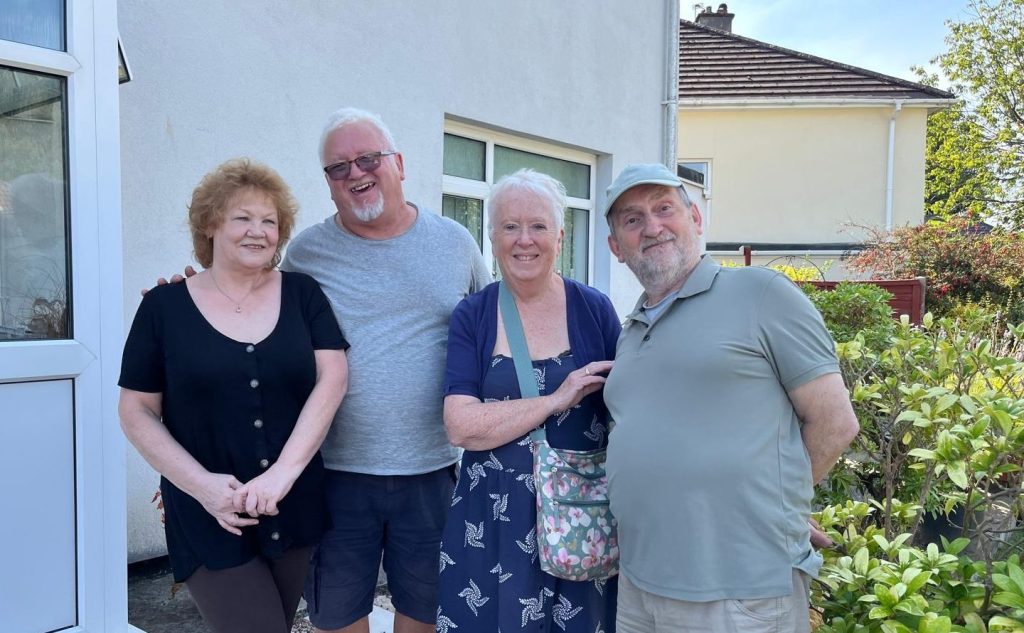
Pictured: Annie and Joe, Shared Lives carers in Bury, with Jean and John, participants in Live More
Live More was supported by Shared Lives Plus, GM ADASS, GMCA, NHS Greater Manchester, all 10 Greater Manchester councils and their local Shared Lives schemes and by local people with dementia and family carers involved in coproduction. But it was only possible because of the Accelerating Reform Fund, which covered the costs of delivering the programme, funding the support and evaluating the outcomes. In the absence of such funding, the space for such exploration is limited, while the methods for credibly evaluating early action, prevention and wellbeing outcomes are under-developed and can be prohibitively expensive. That contributes to a ‘doom loop’ where opportunities to prevent people’s health and wellbeing avoidably deteriorating are missed, and pressure on our already overstretched health and social care systems continues to grow. That’s why Shared Lives Plus backs #SocialCareFuture and others including the Local Government Association and ADASS in calling for central government investment to evaluate early action and support.
I’m pleased to say though that Live More is… living more, with people and families continuing to draw on the support in Greater Manchester, and new pilots getting started elsewhere in the country including North West London, and Hartlepool.
Dementia is life changing, but contrary to some accounts and as I saw with my own family, it is not immediately life ending. Nor is the isolation, pressure and distress which characterises too many people and families’ experience of living with dementia inevitable. We hope that Live More will not only inspire more places to consider how Shared Lives can help, but to recognise the wider opportunities to irrigate the desert, see flourishing ecosystems of neighbourhood support grow, and ultimately, ease pressures on our health and social care system.